
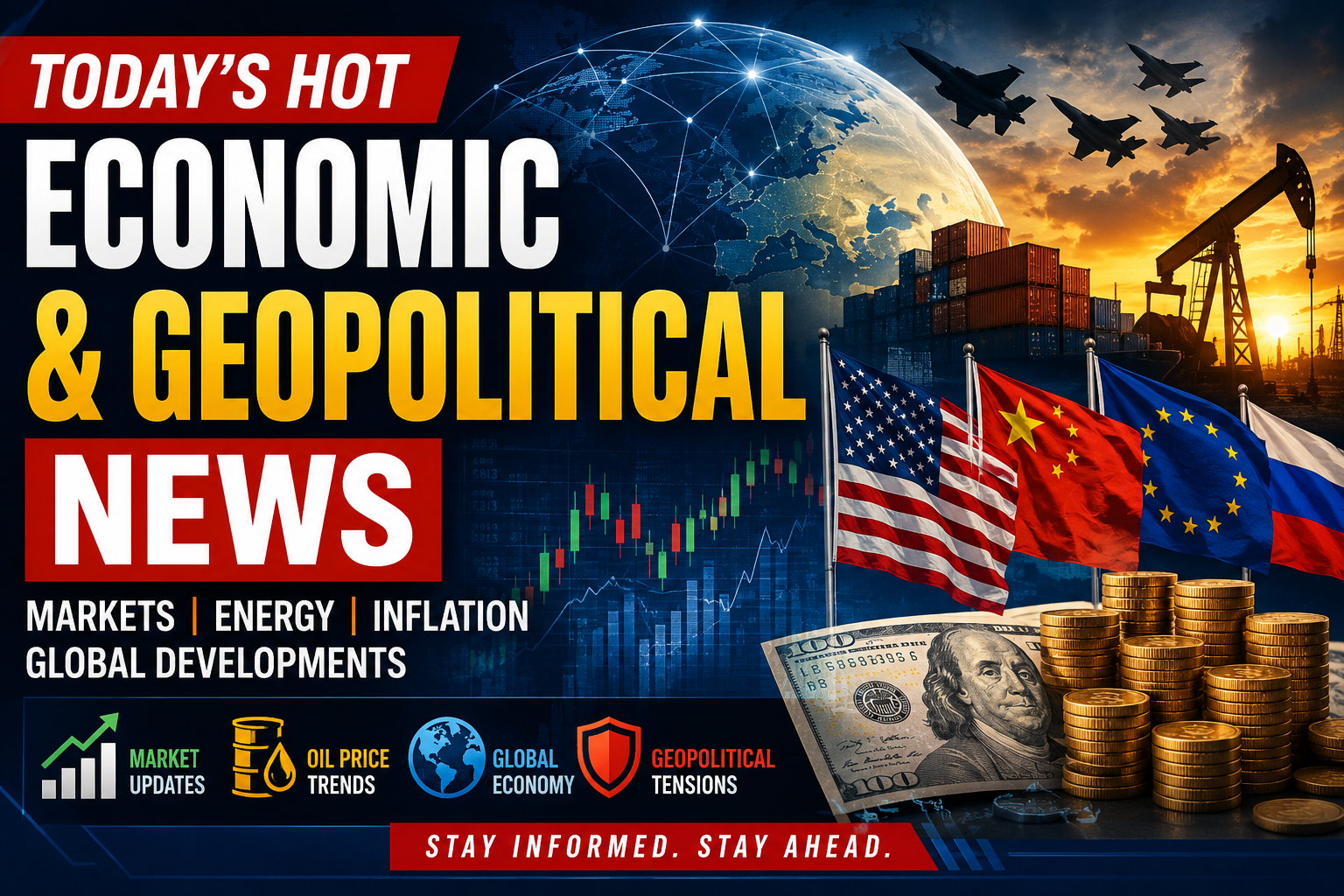
Read today’s top economic and geopolitical news including oil markets, global growth outlook, central bank moves, inflation concerns and international developments.
Table of Contents
ToggleToday’s Hot Economic and Geopolitical News
Global markets and international politics remain closely connected as energy prices, central bank signals, and diplomatic developments continue shaping investor sentiment worldwide.
Today’s headlines show how economic stability and geopolitical decisions are increasingly influencing trade, inflation, investment, and long-term growth expectations.
Oil Markets React as Shipping Activity Returns
One of the biggest economic developments today is the easing pressure in energy markets after renewed shipping movement through the Strait of Hormuz.
Oil prices moved lower as traders responded to reduced concerns about immediate supply disruption. Lower oil prices may provide short-term relief for transportation costs and inflation expectations.
However, analysts continue to warn that energy markets remain sensitive to geopolitical uncertainty and diplomatic outcomes.
Middle East Developments Remain in Global Spotlight
International attention remains focused on diplomatic activity involving regional security and negotiations aimed at reducing tensions.
Recent discussions referenced potential frameworks designed to support de-escalation and restore confidence across international markets.
Energy markets are also monitoring developments closely because shipping routes and supply networks continue to affect global pricing.
Central Banks Stay Focused on Inflation
Global investors are closely watching central bank policies as inflation remains a major concern.
Recent signals from financial markets indicate expectations that interest rates may stay elevated for longer if inflation does not slow.
Higher borrowing costs continue to affect businesses, governments, and household spending decisions.
Global Growth Outlook Faces New Pressure
International institutions continue to highlight slower growth expectations for 2026.
Economic forecasts suggest that higher energy costs, tighter financial conditions, and uncertainty in international trade could limit expansion across multiple regions.
Technology investment and artificial intelligence remain among the sectors providing support to growth.
Geopolitical Tensions Continue to Influence Markets
Diplomatic negotiations and regional security developments remain major drivers of market behavior.
Energy security, supply chain resilience, and strategic investment policies are becoming central priorities for governments and businesses.
Many countries are increasing focus on economic resilience while balancing inflation control and growth.
Why This Matters
- Economic and geopolitical events are no longer separate stories.
- Energy prices affect inflation.
- Inflation affects interest rates.
- Interest rates affect investment and employment.
- This interconnected environment means that global decisions made today can quickly influence businesses and consumers worldwide.
Key Takeaways
- Oil markets remain sensitive to geopolitical developments
- Inflation continues influencing central bank decisions
- Global growth forecasts remain under pressure
- Energy and trade security are becoming strategic priorities
- Investors continue watching international policy changes
Internal Links
World & Breaking News
Geopolitical & Global Affairs
Frequently Asked Questions
Why are geopolitical events affecting the economy?
Why are oil prices important?
What should businesses watch next?
Disclaimer: Information may change after publication. Always verify eligibility, dates, and application links from official sources before submitting your application.